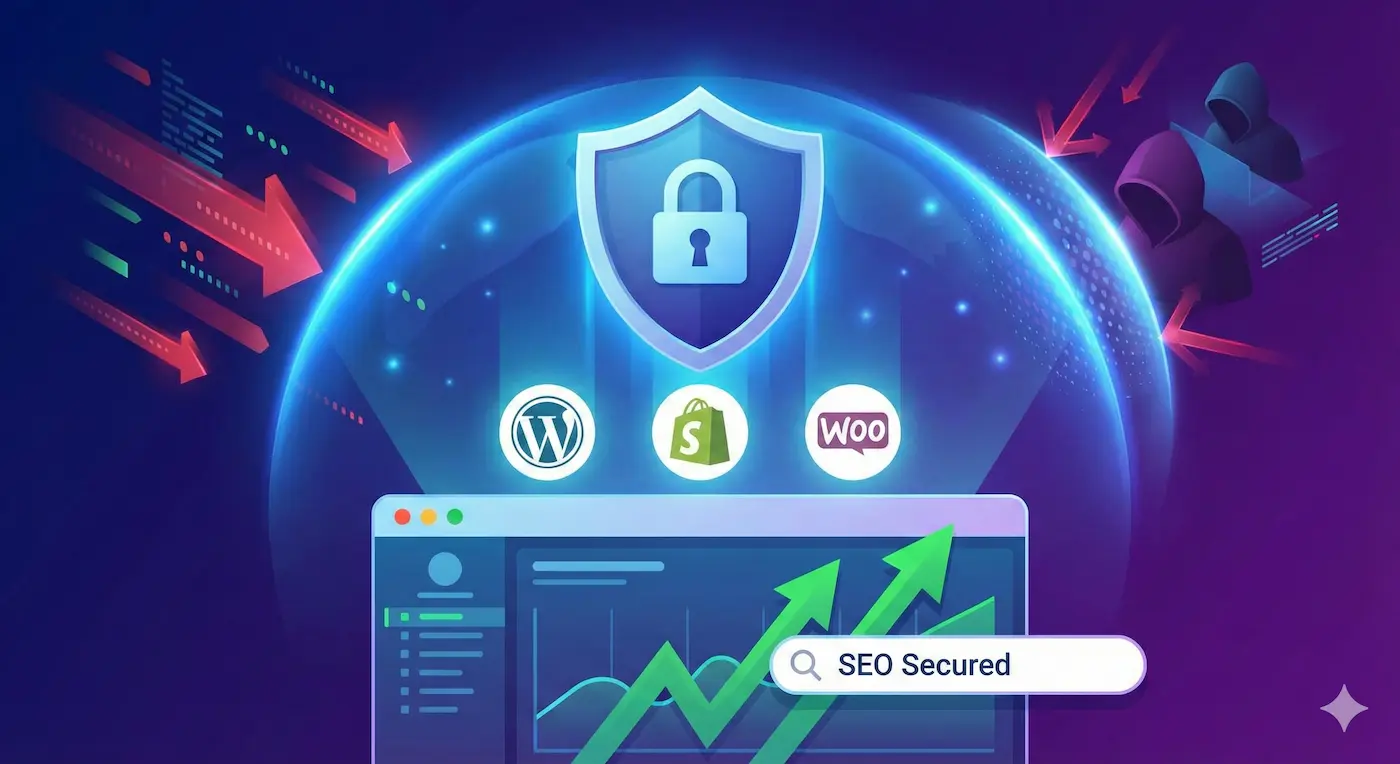
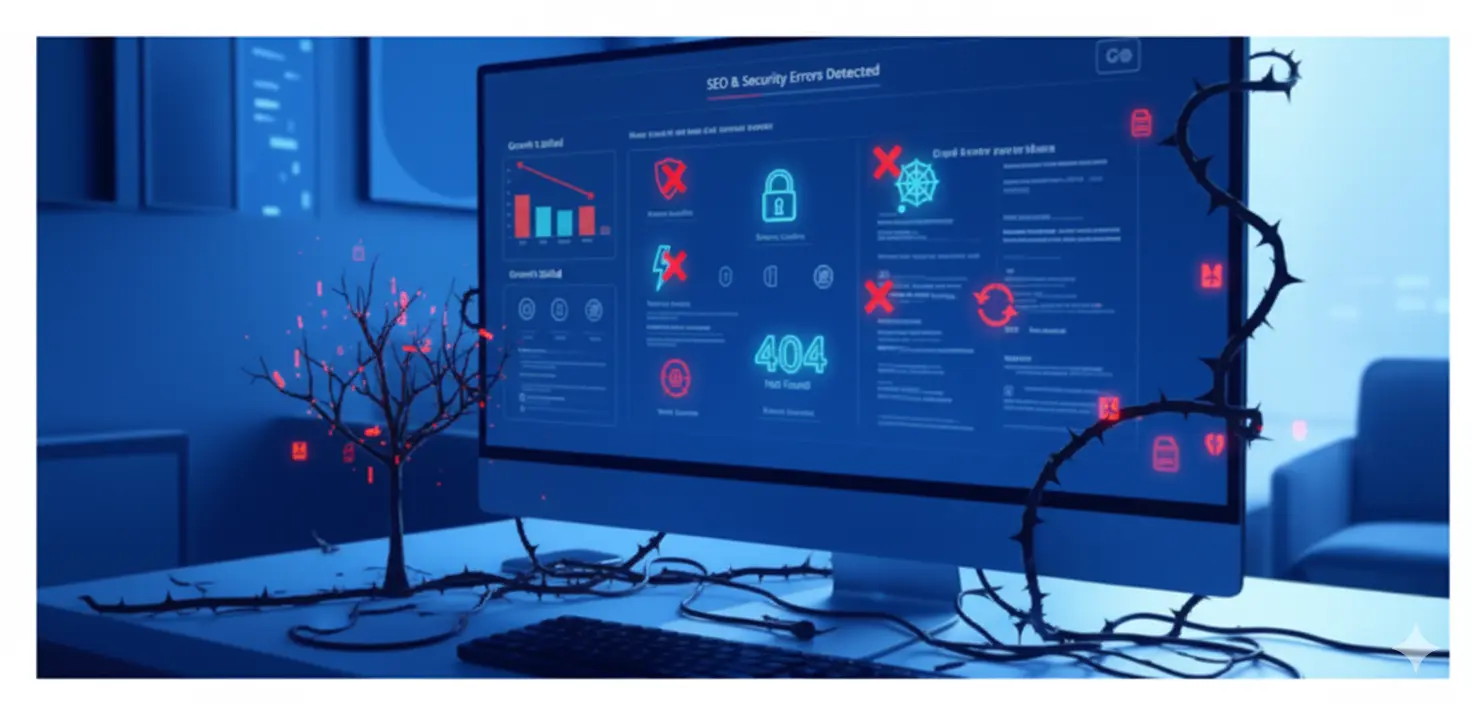
Why SMEs Are the #1 Target for Hackers in 2025 (And How to Protect Yourself)
🛡️ Executive Summary: Key Points
- The Automated Threat: 43% of global cyberattacks target SMBs. Bots scan 100,000 sites/hour seeking basic vulnerabilities, regardless of your revenue size.
- The Criminal ROI: Extorting $5,000 from 200 SMBs is more profitable than attacking a fortified corporation. 60-80% of SMB attacks succeed vs 5-10% against large enterprises.
- The Devastating Impact: 60% of small businesses close within 6 months post-attack. Average cost: $200,000 USD. Average breach detection time: 212 days of silent exposure.
- The Preventive Solution: 95% of SMBs have 5+ unpatched critical vulnerabilities. A web exposure audit identifies gaps before attackers do, for less than the cost of 1 day of downtime.
Fast Facts You Can't Ignore:
- 43% of all global cyberattacks now specifically target SMEs (Small and Medium-sized Enterprises).
- 60% of small businesses close their doors within 6 months of a major data breach.
- $200,000 USD: The average total cost per incident (including fines, remediation, and lost business).
- 212 days: The average time it takes for a company to detect a breach.
The Miscalculation That Could Cost You Your Business
"Who would want to hack my business? I just sell consulting services, not state secrets."
If you've ever thought this, you're not alone. It's the most common phrase among small business owners, but also the most dangerous mindset in the current digital era.
The reality is harsh: trends for 2025 and 2026 show an aggressive spike in automated attacks. The uncomfortable truth is that hackers don't attack you for who you are, but for what you represent: an open door with minimal defenses and maximum quick profitability.
The Automation of Evil: Trawling vs. Harpooning
How do automated scanning bots work?
Forget the Hollywood image of a hooded hacker manually choosing victims on a black screen. The reality of cybersecurity for SMEs is much more industrial.
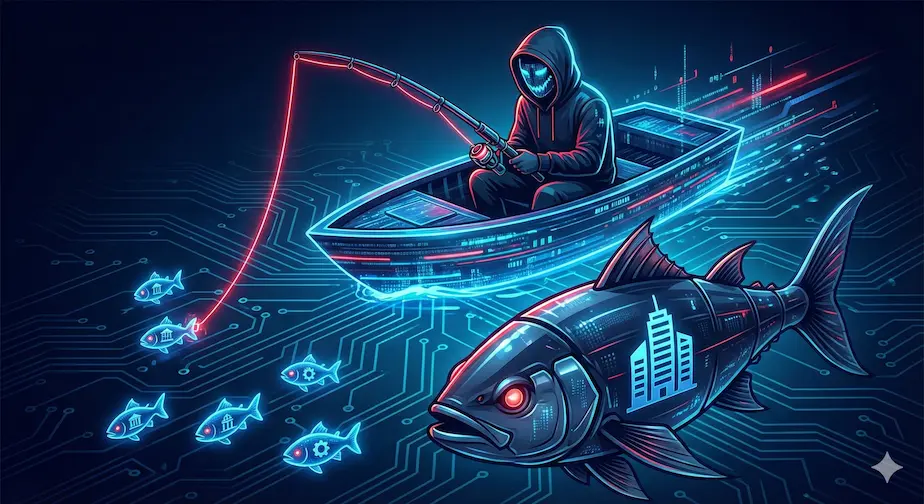
Modern criminals use bots and AI to scan millions of websites simultaneously. It's like industrial trawling: Fisherman don't look for a specific fish; they cast massive nets into the ocean and catch whatever falls in. If your web server has an outdated WordPress plugin, a form without a captcha, or poor security configuration, the net catches you automatically.
The scary numbers:
- A single bot can scan 100,000 websites per hour.
- There are over 150,000 known vulnerabilities (CVEs) cataloged.
- 95% of SMEs have at least 5 unpatched critical vulnerabilities.
It doesn't matter if you invoice $1,000 or $1 million a month. To the bot, you are simply a vulnerable IP address on a list.
The Cybercrime Economy: Why Your SME Is More Profitable Than Apple
Here comes the cruel math of modern cybercrime. For an attacker, the Return on Investment (ROI) is often higher when attacking small businesses than giants.
| Variable | Attacking a Giant Corp 🏢 | Attacking Your SME 🏠 |
|---|---|---|
| Time Required | 6 to 12 months | 15 min to 2 hours |
| Team Needed | Elite hacker group | 1 person with automated software |
| Attack Cost | $500,000 - $2M | $50 - $500 |
| Success Probability | 5-10% (High Defenses) | 60-80% (Low Defenses) |
| Legal Risk | Very High (FBI/Interpol) | Almost Zero |
The Ransomware Business Model
For a digital criminal, it is mathematically more efficient to extort $5,000 from 200 small companies than to try to steal $1,000,000 from a single armored multinational. SMEs are the perfect victim because:
- They pay faster (panic over data loss and lack of backups forces them).
- They don't have complex legal teams to delay payment.
- They rarely report crimes due to embarrassment or lack of technical knowledge.
The Supply Chain Attack: When You Are the Bridge, Not the Destination
Sometimes, your SME isn't the final target. You are the means to reach the real prize: your large clients.
Hackers know that big companies invest millions in security, but their vendors often don't. The modus operandi is simple:
- Identification: They see you work with "Big Enterprise Inc."
- Infiltration: They attack your system (the weak link).
- Escalation: They use your legitimate email or access to send malware to your client.
If this happens, the damage is twofold: you lose your data and face million-dollar lawsuits from your clients for negligence.
Warning Signs: Are You Already Being Scanned?
Before a successful attack (like Ransomware), criminals usually leave reconnaissance footprints. If you notice these, act fast:
- ⚠️ Repeated failed login attempts at unusual hours.
- ⚠️ Abnormal web traffic from countries where you don't have clients.
- ⚠️ Files modified on your server without explanation.
- ⚠️ Your website loads unusually slow.
Your Solution: Accessible (and Realistic) Cybersecurity
The good news is you don't need a NASA-level budget. Most successful attacks exploit basic vulnerabilities that can be closed with minimal investment.
Security by obscurity ("no one sees me") is dead. In 2025, the critical first step is understanding your real level of exposure. Not what you think is secure, but what a hacker sees when they scan you.
Immediate Action Plan: Find Your Gaps Before They Do
At YourSecureScan, we have designed a service specifically to stop this bleeding in SMEs.
Our Secure Web Exposure service simulates exactly how attackers view your business from the outside:
- ✅ Full Infrastructure Scan (Real attack simulation).
- ✅ Detailed Report (Clear and understandable, delivered in 48 hours).
- ✅ Prioritized Action Plan: We tell you what to close first.
- ✅ Advisory Included so you understand the risks without jargon.
The Investment: $600 USD.
(Think about it: That's less than the cost of just 1 day of business downtime caused by an attack).
Don't wait to become part of that 43% statistic. Prevention is no longer an optional expense; it is the smartest investment to survive in 2025.
Frequently Asked Questions
Why do hackers attack SMBs if they have less money than large corporations?
The criminal math is clear: attacking 200 SMBs with 60-80% success rate extorting $5,000 each is more profitable than attempting to steal $1M from a fortified corporation with only 5-10% success. SMB attacks require 15 minutes-2 hours vs 6-12 months for corporations, with costs of $50-500 vs $500K-2M. SMBs pay faster due to data loss panic, rarely report incidents, and lack complex legal teams.
How do automated scanning bots work and why is my business vulnerable?
Modern bots automatically scan 100,000 websites per hour searching among over 150,000 known vulnerabilities (CVEs). They work like industrial trawl fishing: they don't choose specific victims, they simply capture everything vulnerable. If your WordPress has outdated plugins, forms without captcha, or misconfigurations, the net catches you automatically. 95% of SMBs have at least 5 unpatched critical vulnerabilities.
What are supply chain attacks and why can my SMB be an indirect target?
Sometimes your SMB isn't the final target, but the bridge to your large clients. Hackers know big companies invest millions in security, but their small suppliers don't. They attack your system (the weak link), then use your legitimate email or access to send malware to your corporate client. If this happens, you face double damage: you lose your data AND face million-dollar lawsuits from clients for security negligence.
How to protect your SMB from automated attacks
Defense against scanning bots and opportunistic attacks
Close unnecessary ports and services
Audit open ports with nmap or ShieldsUP. Close FTP (port 21), Telnet (23), SMB (445). Only leave HTTPS (443) and SSH (22) if necessary.
Change default credentials
Change default usernames and passwords for: WiFi router, hosting panel, database, CMS admin. Bots automatically try 'admin/admin'.
Implement rate limiting on forms
Add captcha to contact and login forms. Limit login attempts to 3 per minute. Use Cloudflare free or security plugins.
Hide server information
Disable banners revealing software versions (Apache, PHP, WordPress). Edit HTTP headers to remove 'X-Powered-By' and 'Server'.
Monitor access logs weekly
Review failed login attempts, suspicious IPs, non-existent requested files. Block IPs with more than 50 failed attempts.
🛡️ Protect Your Digital Security
Free tools related to "Why SMEs Are the #1 Target for Hackers …"
Secure Password Generator
Create unhackable passwords instantly
Email Breach Checker
Find out if your email was compromised in any data breach