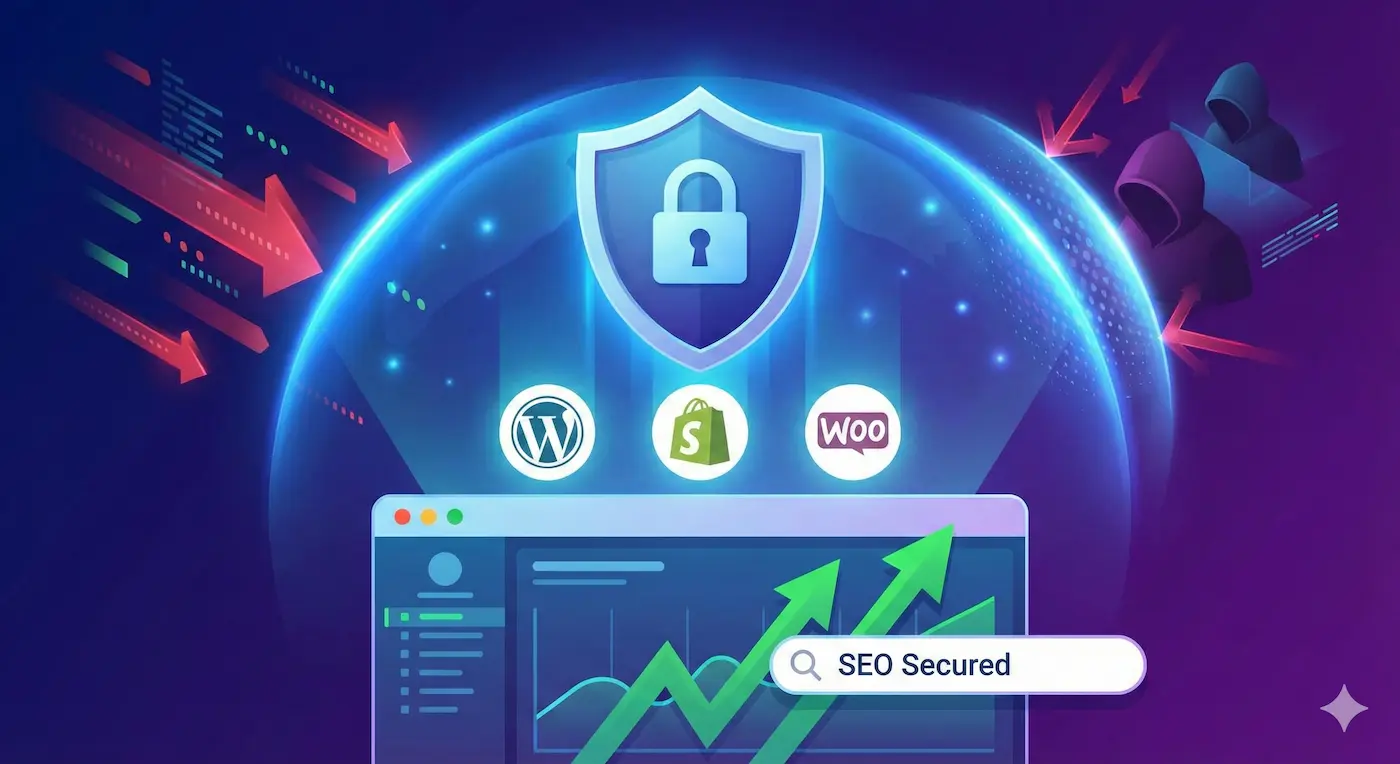
Stop These SEO and Security Errors Now
🛡️ Executive Summary: Key Points
- The Hidden Threat: Google penalizes vulnerable sites causing up to 50% organic traffic loss. 43% of cyberattacks target small businesses that believe they're "too small".
- The Underestimated Risk: 95% of successful breaches start with a simple phishing email. Your competition can destroy your ranking for just $25 through negative SEO available on public platforms.
- The Strategic Impact: Premature SEO investment (before MVP validation or with limited runway) can cost thousands without return. The wrong platform limits your growth with migration costs of €15,000-50,000.
- The Holistic Solution: An initial audit identifies vulnerabilities before Google penalizes you. Proactive protection + SEO strategy aligned with lifecycle = sustainable growth without compromising security.
Introduction
Startup founders face a constant dilemma: limited budgets, conflicting advice, and pressure to grow quickly. While you focus on perfecting your product, critical areas like SEO and digital security often get overlooked.
However, these "invisible" elements can determine your business's success or failure. A security vulnerability doesn't just compromise data; it can destroy your Google ranking overnight.
The following truths may be uncomfortable to accept, but understanding them will help you build a startup that is not only innovative but also resilient and ready to scale.
1. Google Penalizes Insecure Sites (And Your Startup IS a Target)
"Security is a top priority for Google... An important part of that is ensuring the websites accessed from Google are secure."
The harsh reality: Google considers security as a ranking factor. A vulnerable site can lose up to 50% of its organic traffic following a penalty.
The dangerous myth: "We're too small to be attacked"
Statistics show otherwise:
- 43% of cyberattacks target small businesses (Qualys)
- Startups take an average of 196 days to detect a breach
- 60% of small businesses close after an attack
Direct consequences:
- Immediate drop in rankings
- Loss of user trust
- Possible inclusion in Google's blacklists
- Permanent damage to domain authority
What to do now?
An initial vulnerability assessment identifies breaches before Google penalizes you.
→ Discover the vulnerabilities limiting your ranking
2. Your Biggest Threat Isn’t a Sophisticated Hacker, It’s an Email
95% of successful breaches start with a phishing email. You don’t need military-grade defenses if an employee clicks the wrong link.
The "Human Firewall" in Startups
In small teams, everyone has multiple responsibilities and works under pressure. This is the perfect recipe for critical errors:
- Speed over security: "It works first, then we secure it"
- Lack of protocols: No time for formal training
- Blind trust: "We all know each other, no need to validate"
The real cost
A single malicious click can:
- Compromise the entire corporate network
- Leak customer data
- Cause downtime lasting weeks
- Lead to fines for GDPR/CCPA non-compliance
The solution is not just technological, it’s cultural. Every team member must be an active defense from day one.
3. Your Competitors Can Destroy Your Ranking for $25
Negative SEO is not a conspiracy theory. It’s a real and accessible threat.
Common Negative SEO attacks:
- Toxic backlink bombardment: Thousands of spammy backlinks
- Malicious duplication: Your content copied on penalized domains
- Backlink sabotage: Requests to remove your links
- Speed attacks: Slowing your site with fake traffic
"A simple search on Seoclerks for 'Negative SEO' shows services starting at just $25"
Why startups are vulnerable
- Few quality backlinks to absorb attacks
- Lack of constant monitoring of backlink profiles
- Limited resources for a quick response
- Lower domain authority means greater impact from attacks
Proactive defense is your only option. Waiting until you detect the attack may be too late.
→ Protect your ranking from malicious attacks
4. Sometimes the Best SEO Strategy Is Not to Do SEO
This truth contradicts everything you’ve read but can save you thousands of dollars in bad investments.
When NOT to Prioritize SEO:
1. MVP Validation
- You need immediate user feedback
- Paid channels deliver results in days, not months
- Search volume may be nonexistent for your innovation
2. Immediate Survival
- Runway under 6 months
- You need revenue NOW for the next round
- SEO takes 4-6 months to show significant results
3. Creating a New Category
- People don’t search for what they don’t know they need
- You must educate the market first
- Demand is created by PR and viral content, not keywords
Opportunity Cost
Every euro and hour invested prematurely in SEO is a euro and hour NOT invested in:
- Critical product development
- Direct customer acquisition
- Market validation
- Fundraising
Time and money are your most irreplaceable assets.
5. Your Current Platform Could Be Your Growth Ceiling
The choice of CMS or ecommerce platform you make today will define your limits tomorrow.
Common platform pitfalls:
WordPress:
- ✅ SEO-friendly by default
- ❌ Slow with many plugins
- ❌ Constant security vulnerabilities
Shopify:
- ✅ Great for fast ecommerce
- ❌ Severe robots.txt limitations
- ❌ Inflexible URL structures
“Free” Platforms:
- ✅ Zero upfront investment
- ❌ Subdomain (yourbusiness.platform.com)
- ❌ Limited control of technical SEO
The Hidden Cost of Migration
Changing platforms later means:
- 3-6 months of intensive technical work
- Temporary loss of 30-50% of traffic
- Risk of losing consolidated rankings
- Development costs of €15,000-50,000
Choose with the next 3-5 years in mind, not just the next 3-5 months.
6. Marketing Isn’t an Expense, It’s Survival
"If you build it, they will come" is Silicon Valley’s most dangerous myth.
The reality of products without marketing:
- 90% of startups fail due to market problems, not product issues
- 42% specifically fail due to lack of market demand
- The best technical product loses to the product with better distribution
Why technical founders avoid marketing:
- Confirmation bias: "The product sells itself"
- Lack of expertise: They don’t know where to start
- Fear of rejection: Selling feels "dirty"
- Perfectionism: "Let’s perfect first, then sell"
Marketing as a Survival Function:
- SEO: Qualified, free long-term traffic
- Security: Protects your digital marketing investment
- Conversion: Maximizes ROI from every visitor
- Retention: Reduces acquisition costs
Without marketing, even the best solution is doomed to die silently.
Conclusion: From Builder to Digital Strategist
Building a successful startup requires a holistic vision from day one. An extraordinary product is only 30% of the equation.
The complete framework includes:
- Product that solves a real problem
- Security that protects reputation and data
- SEO that generates sustainable qualified traffic
- Conversion that maximizes every visitor
- Strategy that cohesively integrates all elements
These aren’t extras to add at the end. They’re the foundation of building a lasting business.
Your Next Step
Now that you know the risks, inaction is your greatest enemy. Every day without protection is a day of exponential vulnerability.
→ Evaluate your current SEO and Security status
Plans specifically designed for startups that need to grow without compromising security.
Is your startup ready to scale safely? Find out in 2 minutes →
Frequently Asked Questions
Why does Google penalize small sites if they're not priority hacker targets?
Although it seems contradictory, 43% of cyberattacks specifically target small businesses because they have fewer defenses. Google considers security as a direct ranking factor: a vulnerable site can lose up to 50% of its organic traffic after a penalty. Startups take an average of 196 days to detect a breach, enough time for permanent damage to domain authority.
What is negative SEO and how can my competition destroy my ranking for $25?
Negative SEO includes malicious tactics like toxic link bombing from spam sites, duplicating your content on penalized domains, sabotaging legitimate backlinks, and speed attacks with fake traffic. Platforms like Seoclerks offer these services from $25. Startups are especially vulnerable because they have few quality backlinks to absorb attacks and lack constant monitoring of their link profile.
When should I NOT invest in SEO for my startup?
Avoid investing in SEO if you're validating your MVP (you need immediate feedback, not traffic in 6 months), have immediate survival needs with runway less than 6 months, or are creating a new category where no one searches for your solution yet. In these cases, every euro in SEO is a euro not invested in critical development, direct acquisition, or fundraising. SEO takes 4-6 months to show significant results.
How to audit SEO and security of your startup in parallel
Practical guide to detect vulnerabilities that harm your ranking and expose your data
Scan basic security vulnerabilities
Use Mozilla Observatory or Security Headers to detect insecure configurations. Check CSP, HTTPS, security headers. Fix critical errors before continuing.
Audit speed and Core Web Vitals
Run PageSpeed Insights and Google Search Console. If LCP > 2.5s or CLS > 0.1, optimize images, remove blocking JavaScript, and improve hosting.
Verify domain data breaches
Check if corporate emails (@yourdomain.com) appear in breaches. Use HIBP verification tools. If there are breaches, force password changes.
Implement toxic backlink monitoring
Set up Google Search Console and Ahrefs/SEMrush. Monitor new backlinks weekly. Disavow spam domains with Google Disavow Tool.
Configure automatic security alerts
Enable alerts in Google Search Console for hacks. Use Uptime Robot to monitor downtime. Configure suspicious login notifications.
Document and schedule monthly reviews
Create monthly audit checklist: backups, updates, log analysis, ranking review. Schedule calendar reminder every first Monday.
🛡️ Protect Your Digital Security
Free tools related to "Stop These SEO and Security Errors Now"
Email Breach Checker
Find out if your email was compromised in any data breach